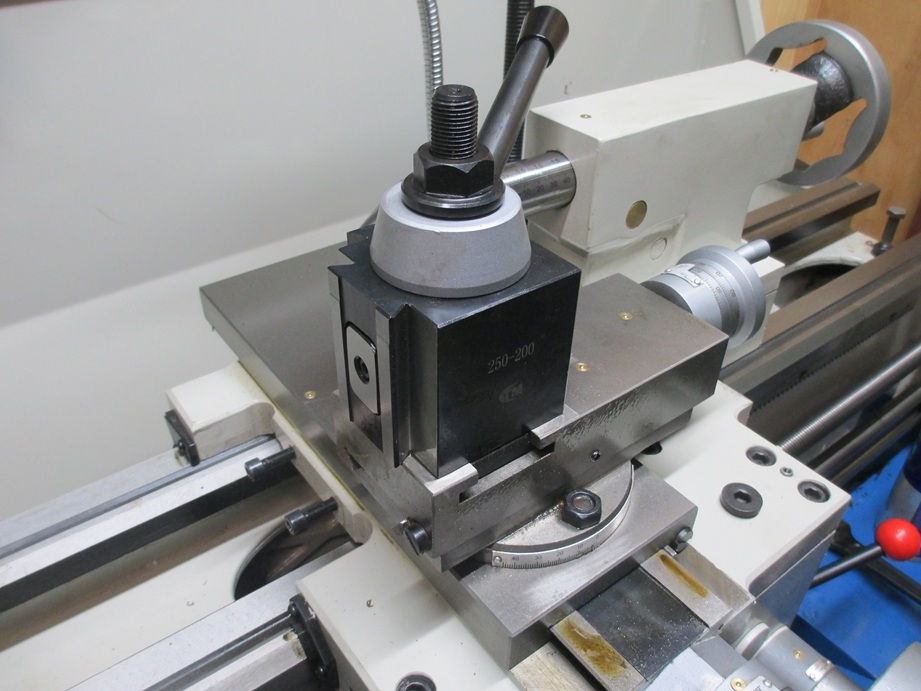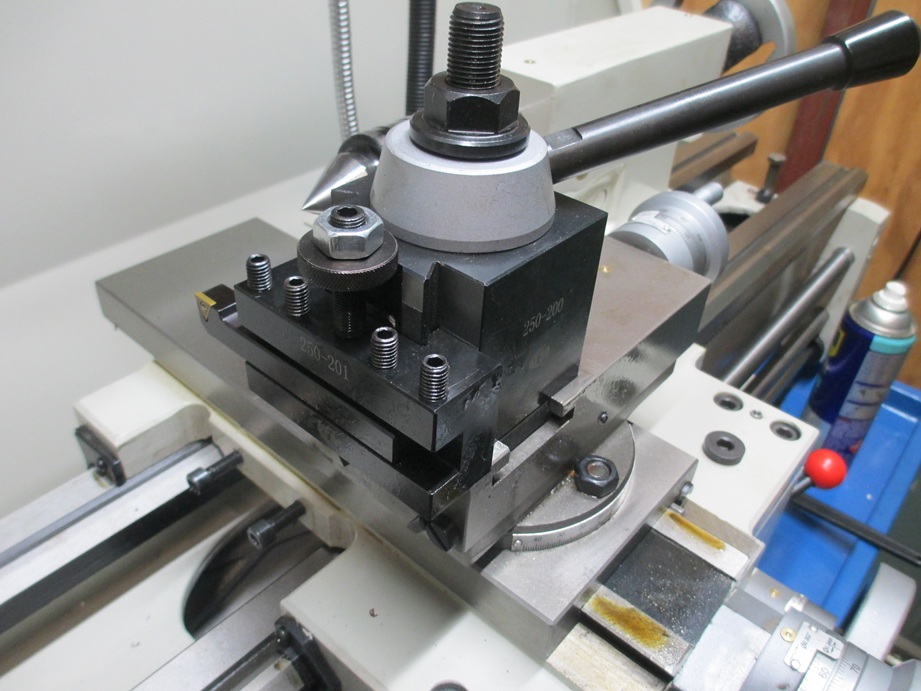
I recently acquired a Hafco "Metal master" metal-working centre lathe, model AL-336. While not strictly essential, a very worthwhile accessory for this machine is the QA-140 quick-change tool post. Being able to change from one tool to another literally in seconds and eliminating the annoyance of having to stuff around with shims every time to set the tool height, for me, made accepting the relatively small additional monetary outlay required to acquire this accessory quite a no-brainer.
The QA-140 isn't made for any one particular model of lathe, but is recommended for lathes with a centre height in the range of 150mm to 170mm. It's sold with a rather unspecific proviso: "Some machining required to suit your lathe".
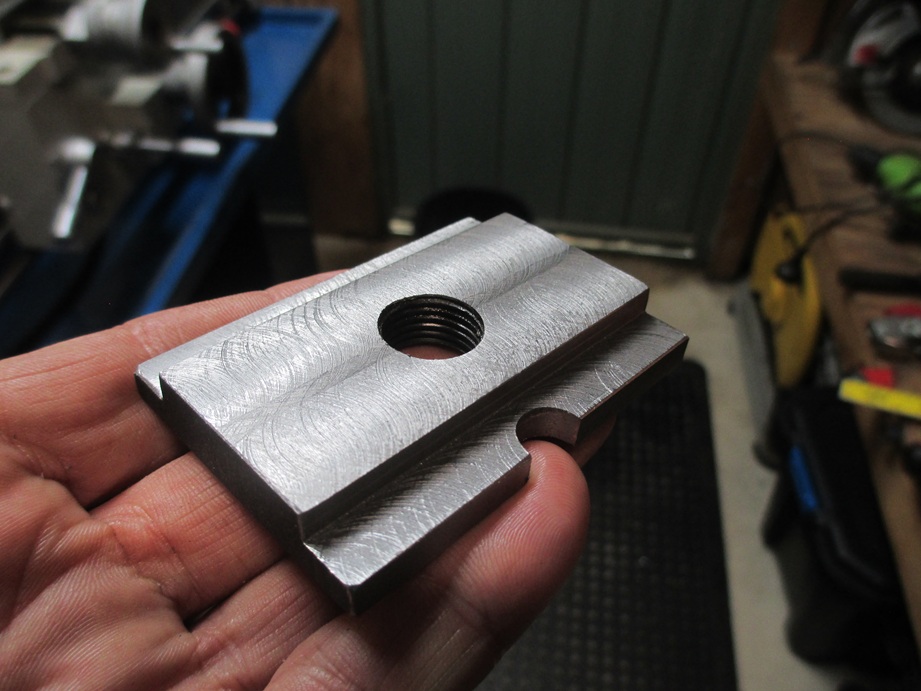
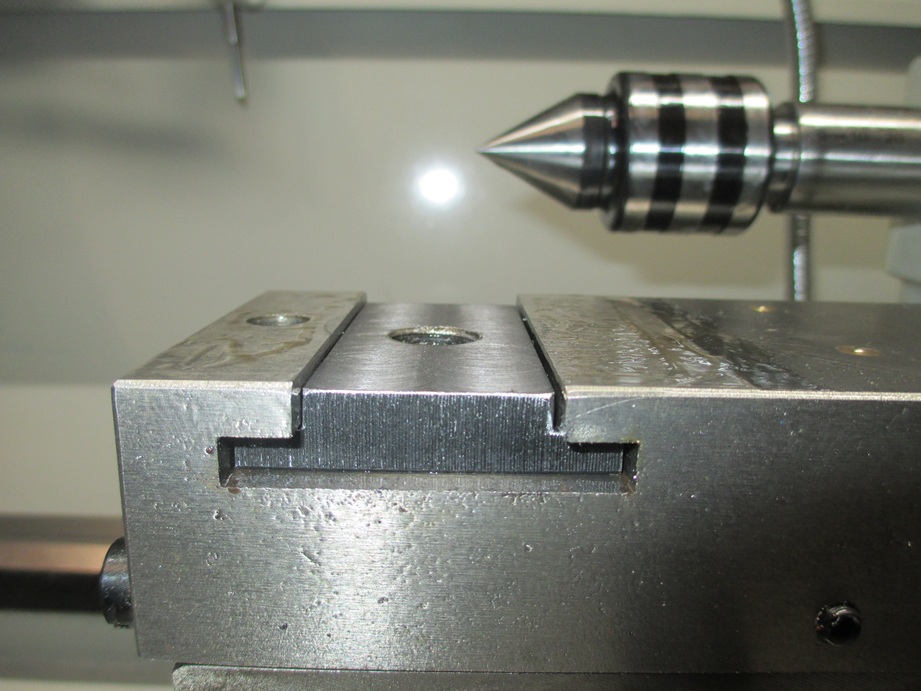
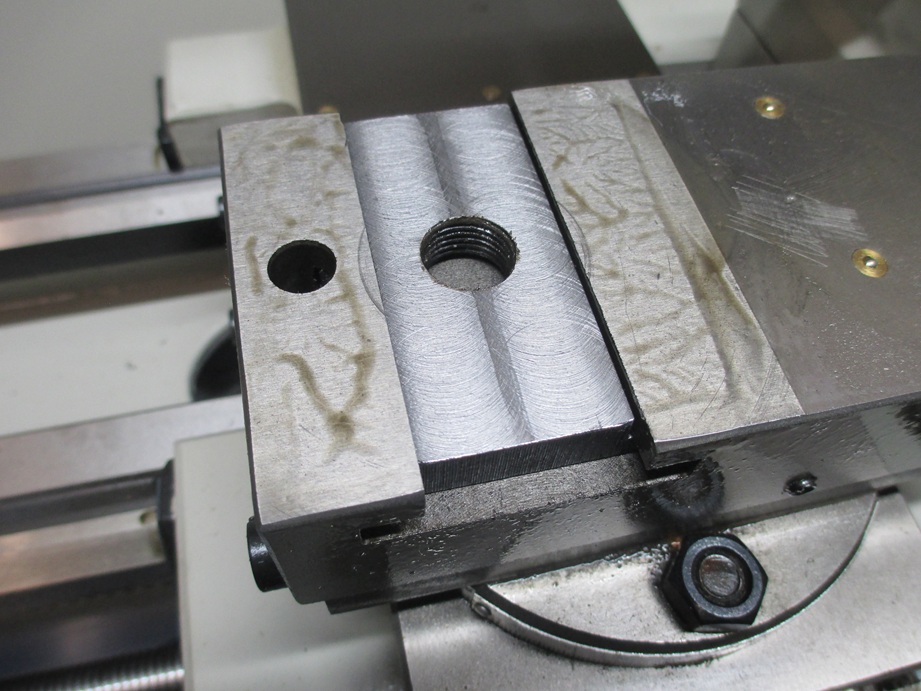
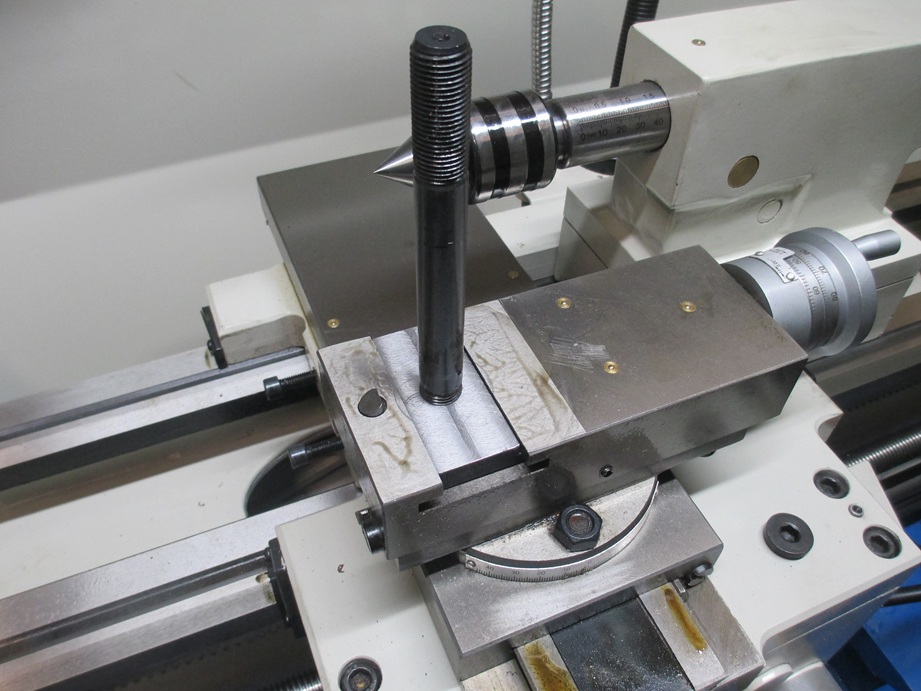
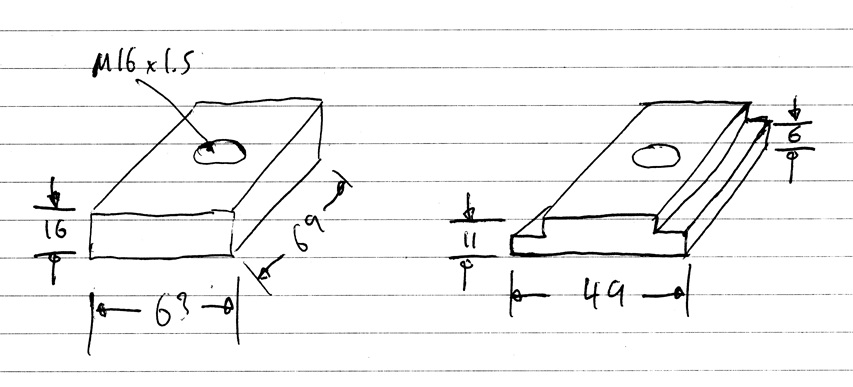
The basic tool post that comes standard with the AL-336 is mounted to the compound rest on an M18 stud. The QA-140, on the other hand, mounts on an M16 stud and therefore requires an M16 T-nut. The QA-140, as I received mine, was conveniently supplied with a T-nut "blank" in the form of a rectangular block made of unhardened steel, of the approximate dimensions 63mm wide, 69mm long and 16mm high. This blank came pre-drilled and tapped in the centre for the M16x1.5 stud.
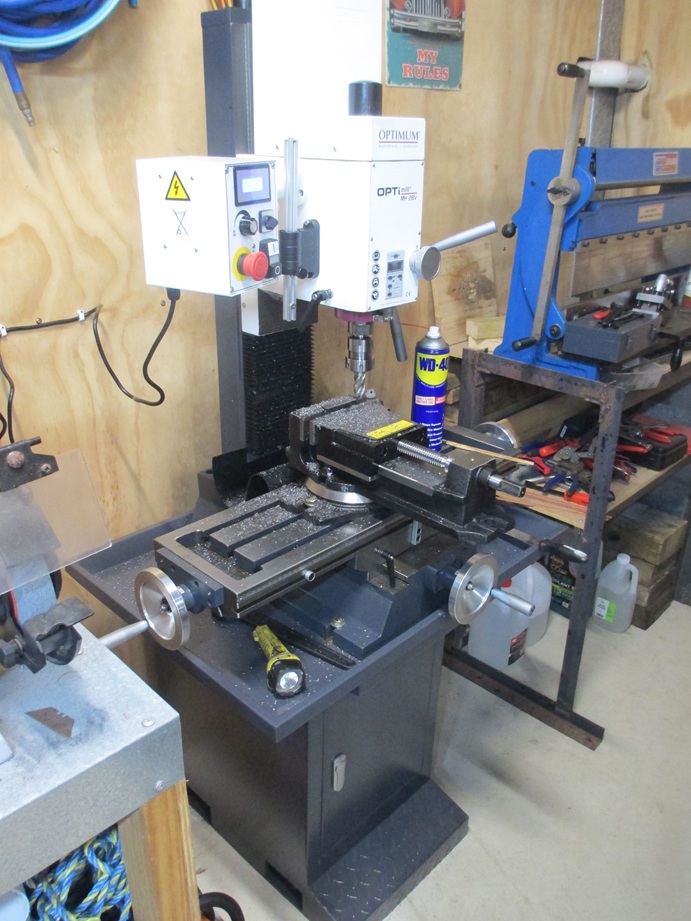
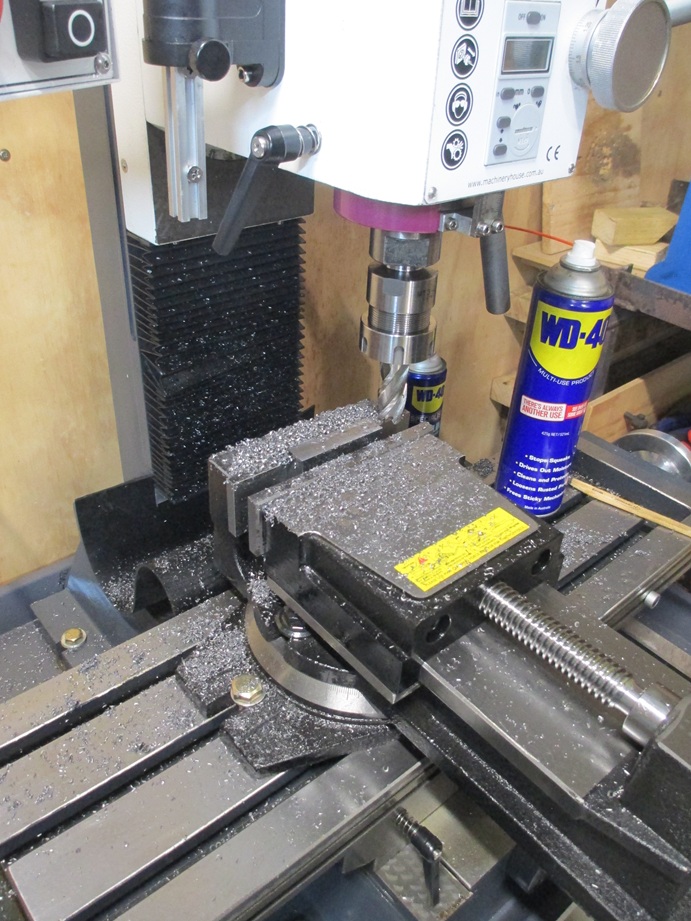
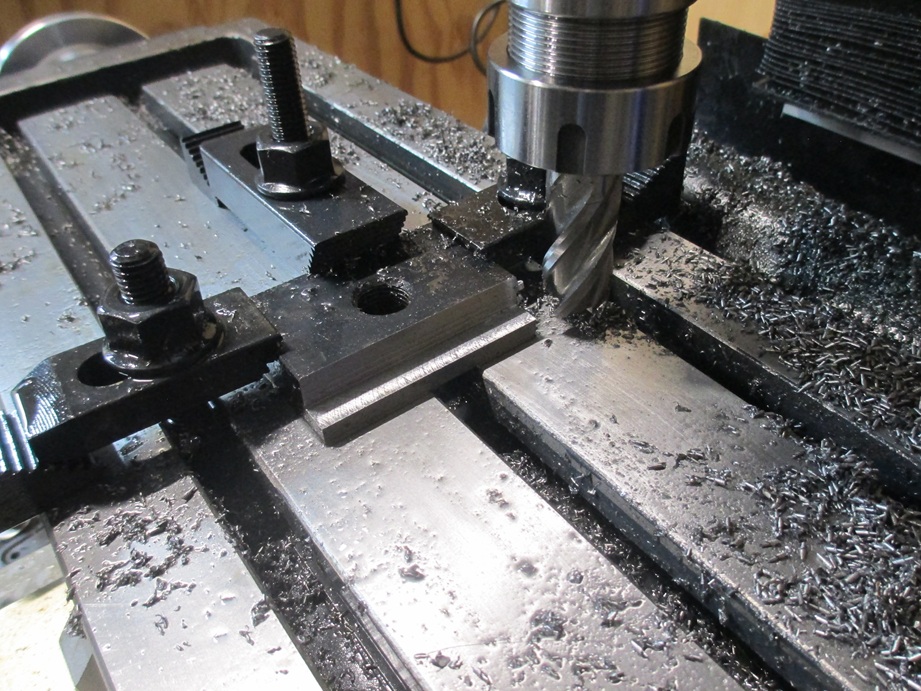
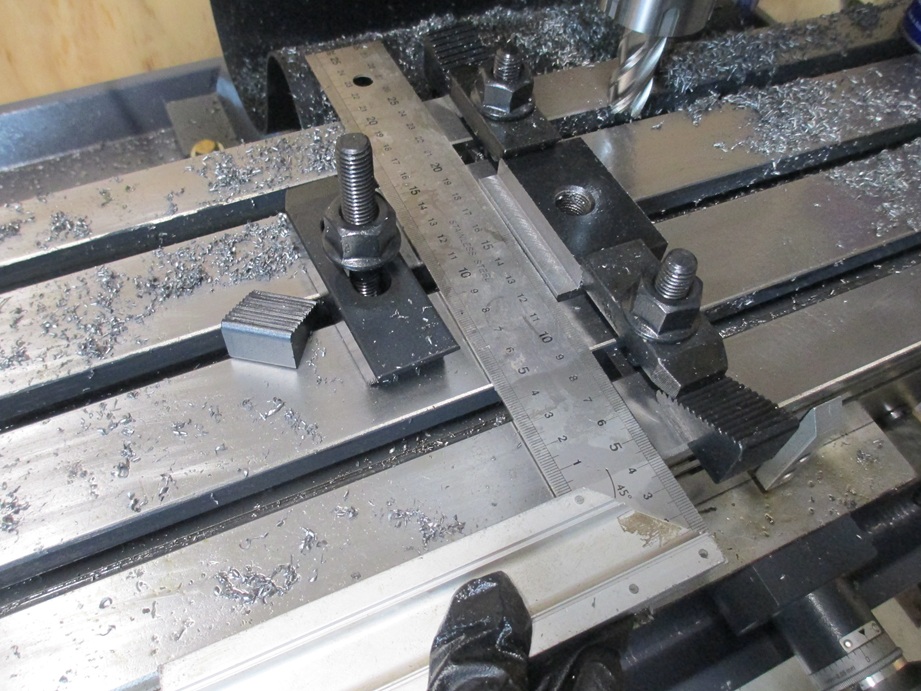
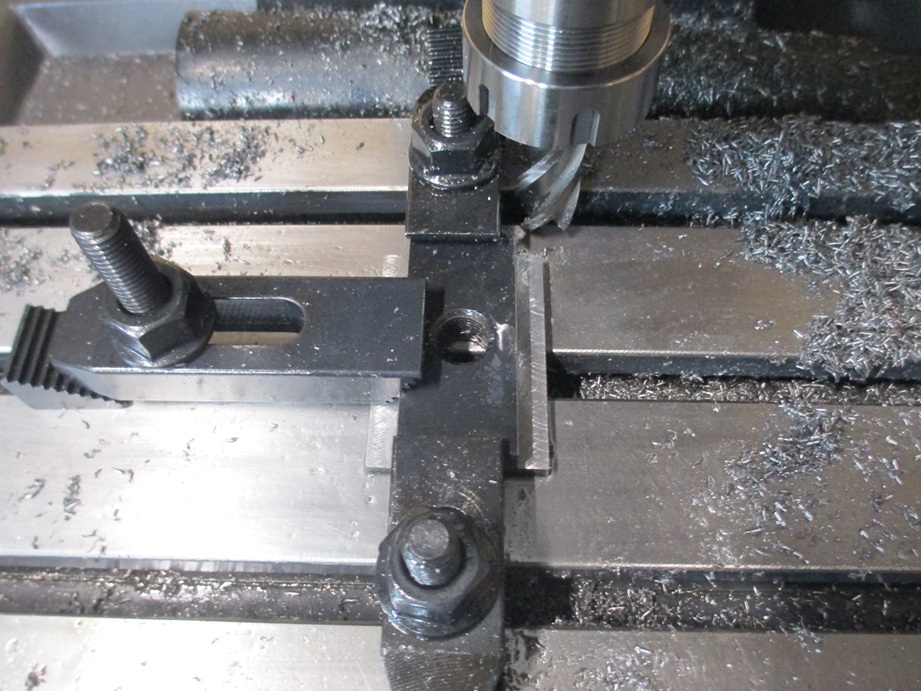
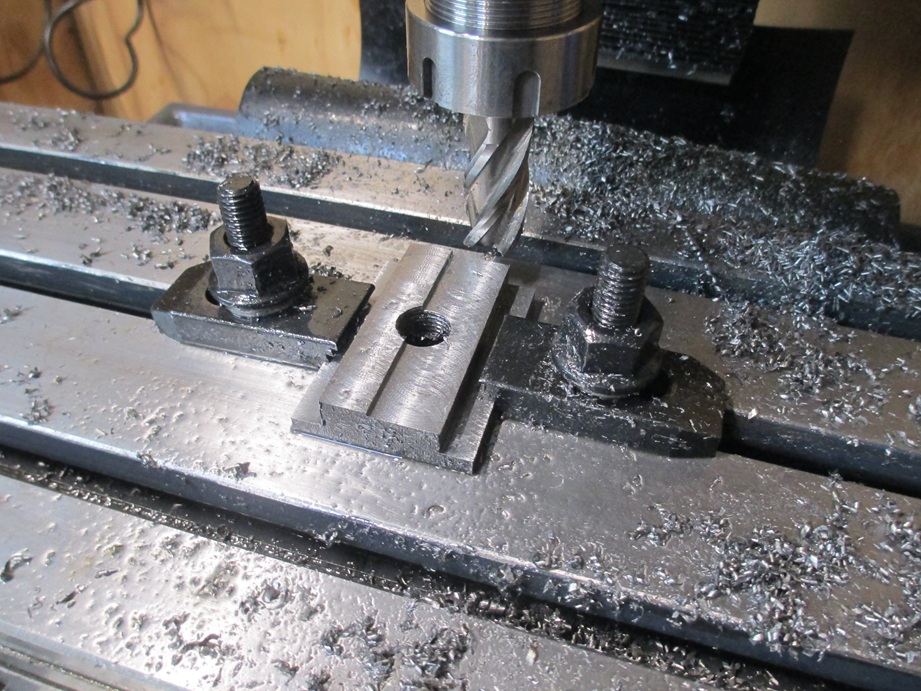
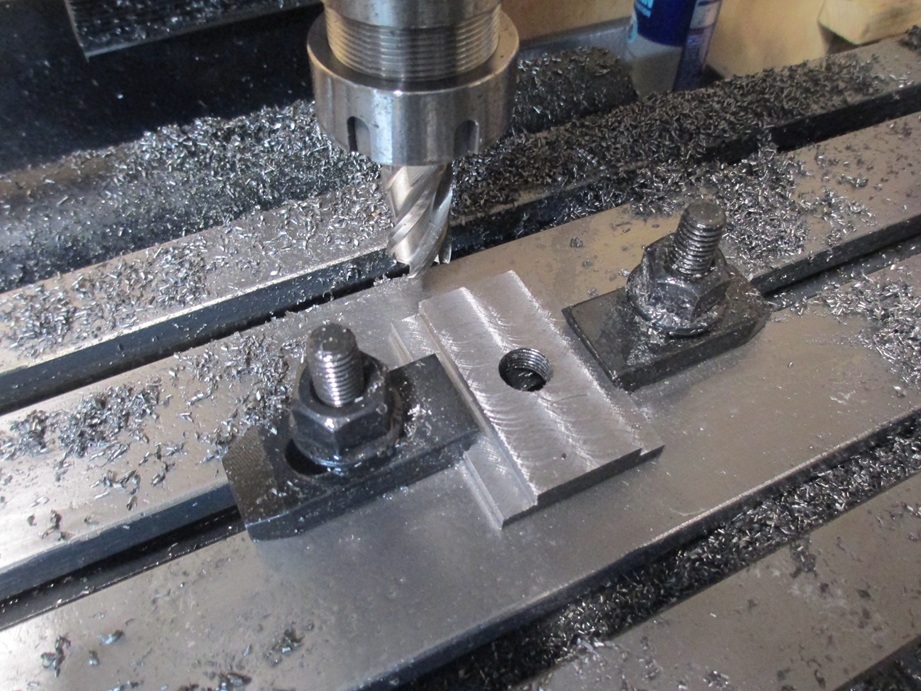
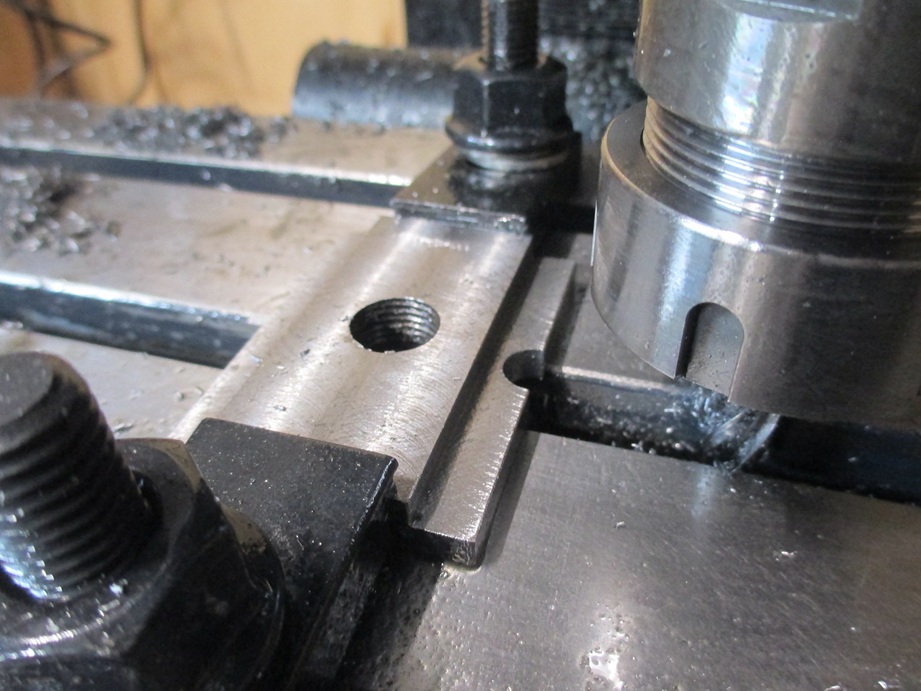
A milling machine is required to reduce this steel block down to the shape and dimensions of a T-nut fitting the AL-336's compound rest. I did all of the necessary machining on my Optimum MH-28V milling machine (another recent acquisition). The first thing to do was to reduce the width down to 49mm, requiring the removal of approximately 7mm of material from either side, lengthwise. These cuts were performed with the workpiece clamped in a vice, vertically on its side, while all other cuts were performed with the workpiece clamped laying flat horizontally directly to the milling machines worktable.
I used a 20mm-diameter HSS end mill cutter for all cutting operations, with the exception of cutting the relief required for the spring-loaded retaining dowel in the AL-336's compound rest. This was simply cut with a 10mm-diameter end mill cutter entering from the side.
The photos that follow below tell the story.